How to Tell if a Rug Is Hand-Knotted or Machine-Made
Check the back, fringe, pattern and knots to tell a hand-knotted rug from a machine-made one, and learn what age and wear clues really mean.
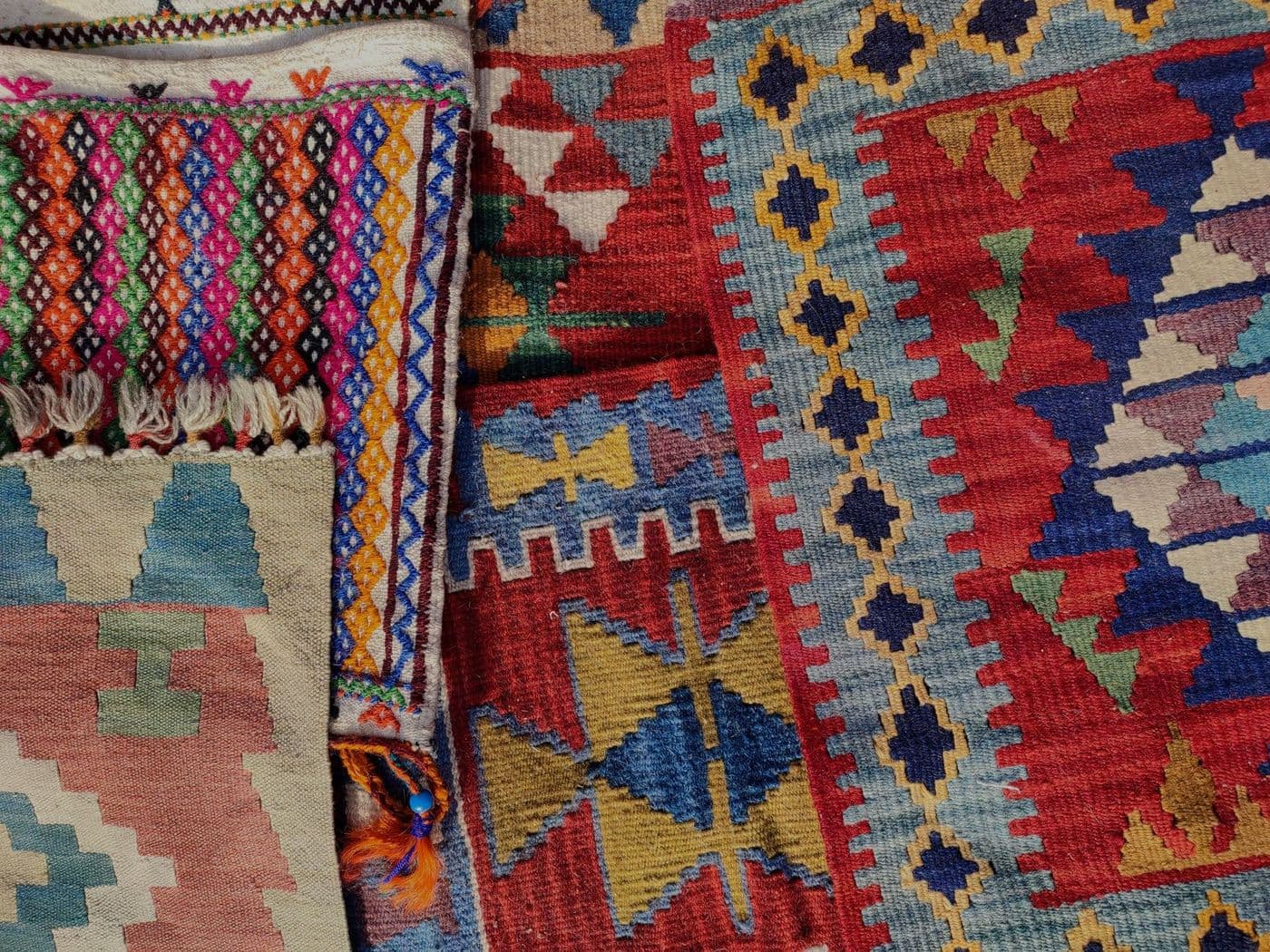
Flip the rug over. On a hand-knotted rug the pattern appears clearly on the back, individual knots are slightly irregular, and the fringe is a continuation of the foundation threads. On a machine-made rug the back is often very uniform, may have a latex or fabric backing, and the fringe is usually sewn on. Slight irregularity is a good sign.
Rugs are one of the hardest categories for beginners because machine-made copies can look remarkably convincing from above. The back of the rug is much more revealing than the front.
These checks help you tell the major construction types apart. They do not tell you value, which depends on origin, age, condition and market demand, so seek a specialist for anything important.
Turn it over
On a hand-knotted rug, the design on the back is a clear, slightly softer mirror of the front. You can see individual knots as tiny rows of dots, and colours match the front exactly.
On many machine-made rugs the back is neat and regular, may have a woven pattern, or is coated with latex or fabric. If the back is covered by glued backing, check any exposed corners or edges.
Check the fringe
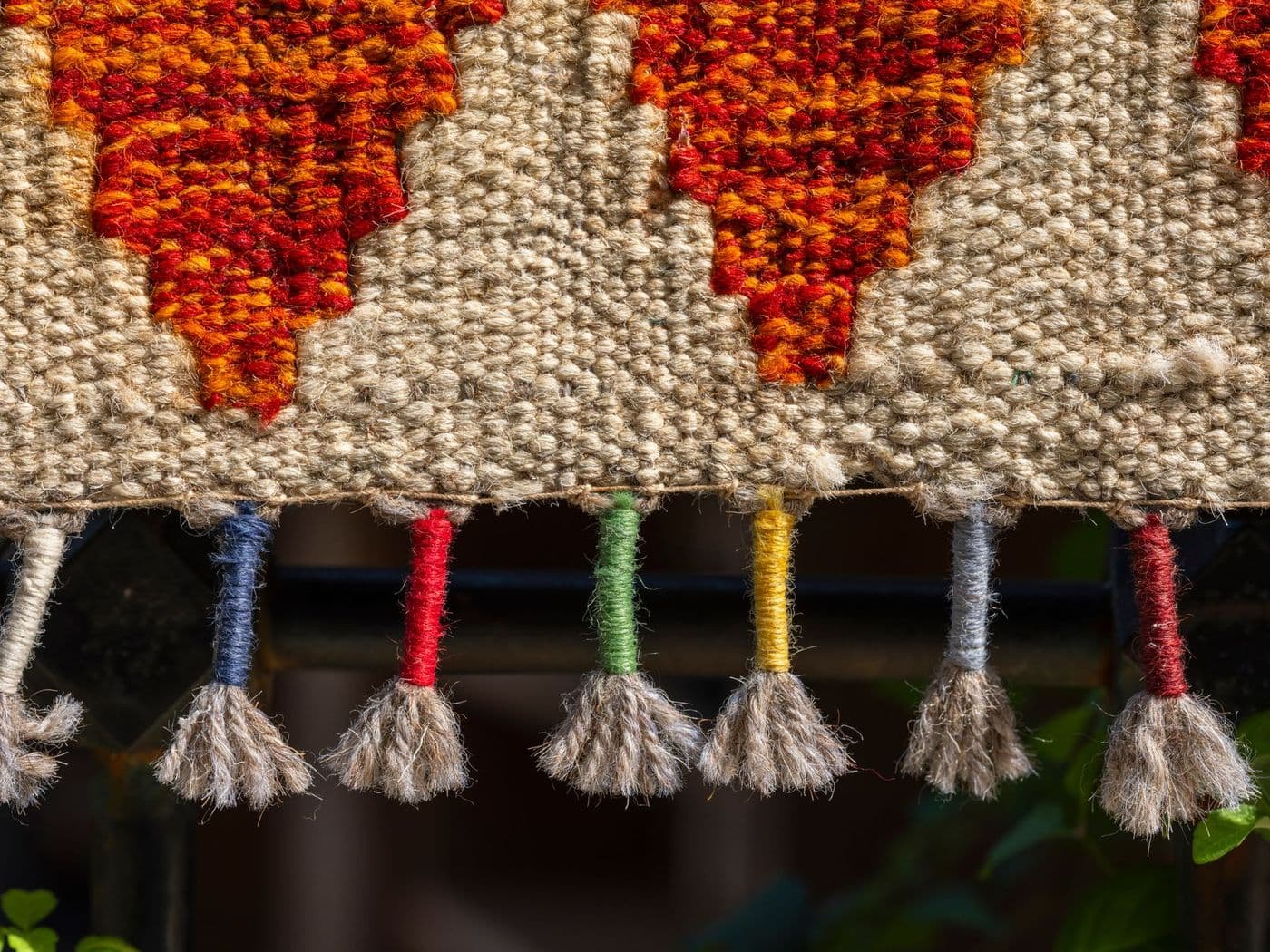
The fringe on a genuine hand-knotted rug is formed from the warp threads that run through the rug, so it is part of the rug's structure. Try to see whether the fringe threads continue into the body of the rug.
On machine-made rugs the fringe is often stitched or glued on the edge. If you can see a separate row of stitching along the end, the fringe has been added.
Look at the knots and pile
Part the pile with your fingers and look at the base. Hand-knotted rugs show individual knots, sometimes slightly uneven in size and shape. The rug may have slight variations in line and pattern from corner to corner.
A perfectly even grid with identical loops or rows can mean a machine-made construction. Pile that has been tufted rather than knotted is common in modern rugs and will look different at the base.
Count the knots per square inch or centimetre if you can. Finer weaves generally take longer to make, though a higher count does not automatically mean a better rug. Compare knot density with other rugs of the same type to understand what is normal for the region and design.
Pattern and colour
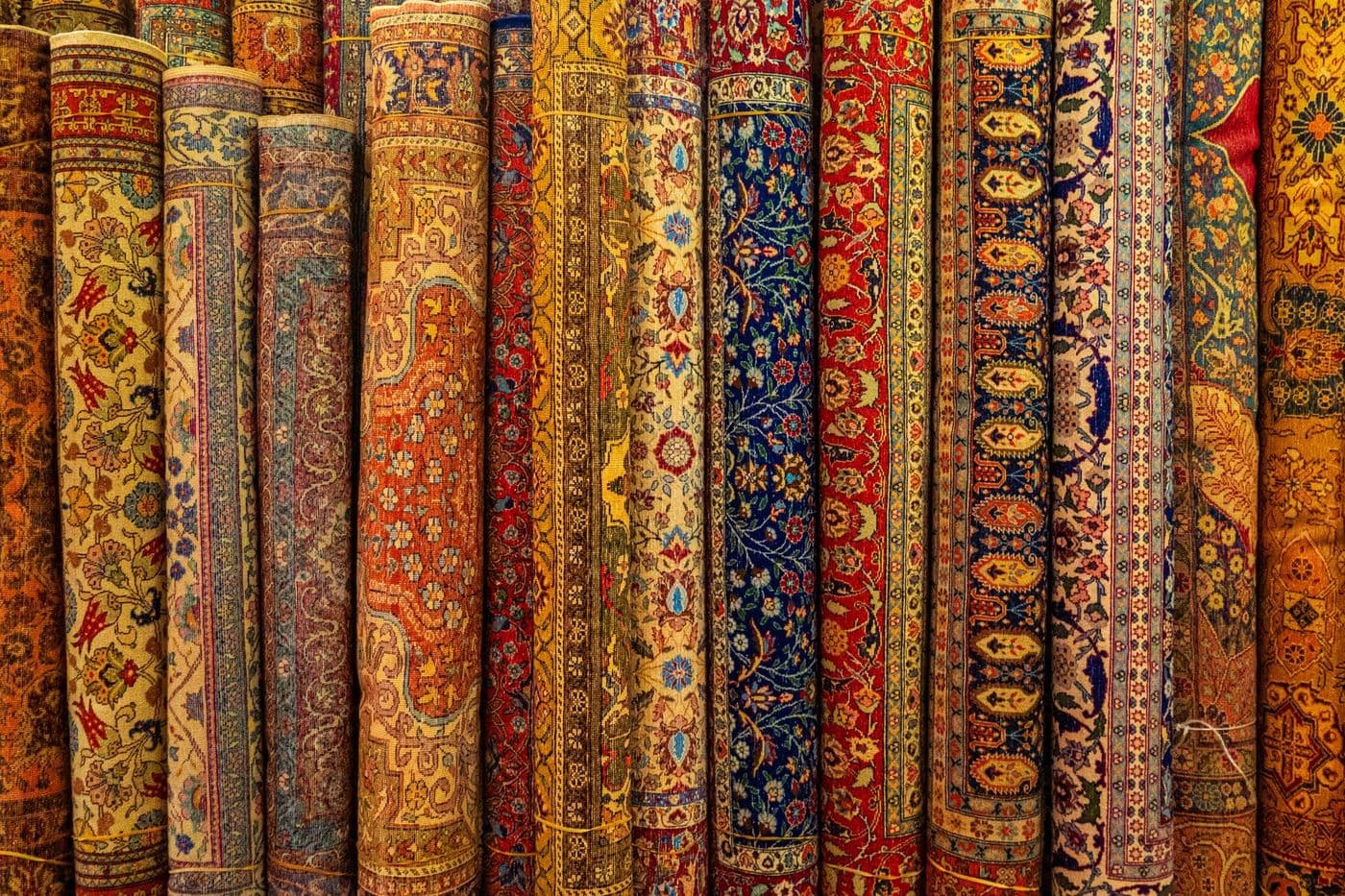
Hand-knotted designs often have small asymmetries: borders that do not quite match, curves that vary slightly, or colour changes in a band called abrash that come from different dye batches. These are characteristic rather than flaws.
Machine-made patterns are consistent and repeated precisely. Very sharp, uniform colour and perfectly symmetrical motifs can point to mechanical production, though skilled weavers can also produce very regular work.
Edges and ends
Examine the sides. Hand-finished rugs often have a bound or overcast edge, usually made with wool thread wrapped around the sides. Machine-made rugs may have serged edges, which look more uniform.
At the ends, hand-knotted rugs may have simple woven bands (kilim ends) before the fringe, whereas machine-made ones often have a flat finishing band or hemmed edge.
Age, wear and repairs
Real age shows as even wear on the pile, softened colours, and signs of mending that follow the structure of the rug. Artificial distressing may be uneven, harsh or only on one side.
Older rugs may have been repaired, reknotted or cleaned. Ask about repairs, and look for patches, dyed areas and darned sections. Condition strongly affects value.
Check the foundation, the threads that run through the rug, for dryness and fraying. If the foundation has deteriorated, the rug may not survive cleaning or heavy use. Dark patches, stiffness or a lingering smell can point to old pet damage or damp, which affect both value and usability.
Care and next steps
Vacuum gently without a beater bar, rotate rugs to even out wear and use an appropriate underlay. Avoid direct sun and damp, which can fade and rot fibres.
For valuable or old rugs, specialist washing and appraisal are worth the cost. Dealers and auction houses with textile specialists can identify regional types and advise on age.
Specialist rug dealers and auction houses can often tell you the region or weaving group a rug belongs to by looking at its design, colours and construction. Bring clear photographs of the front, back, fringe and any labels, and be ready to say where and when you acquired it. That background helps professionals form an opinion more quickly.
Tip: Bend a corner of the rug back and look at the knots from the side. Hand-knotted rugs flex and show their structure, while many machine-made ones feel stiffer.
Frequently asked questions
Does a fringe always show whether a rug is hand-knotted?
It is a helpful clue, but not conclusive. Some rugs have replaced or added fringe. Check it with other signs such as the back and the knots.
Is a hand-knotted rug always better?
Not always. Quality varies widely in both hand-made and machine-made rugs. Materials, density, condition and design all matter.
What is abrash?
It is a visible variation in colour within an area of a rug, caused by differences between dye batches. It is often considered part of the character of a hand-made rug.
Can I clean an antique rug myself?
Light vacuuming is fine, but washing can damage dyes and fibres. Use a specialist for deep cleaning.
Advertisement
General information only. Check product labels and manufacturer instructions before you start.
Keep reading

How to Tell Antique Glass from Modern Glass: Pontils, Seams and Clues
Use pontil marks, mould seams, wear and weight to tell antique glassware from modern copies, and learn why bubbles and a ring sound are unreliable.
How to Read Antique Silver Hallmarks: A Beginner's Guide
Learn what British silver hallmarks mean: standard mark, town mark, date letter and maker's mark, plus how to spot silver plate and when to ask an expert.
How to Check Antique Furniture Before You Buy: A Buyer's Checklist
A practical checklist for inspecting antique furniture at shops, markets and auctions: structure, drawers, finish, repairs, smells and questions to ask.