Art Nouveau vs Art Deco: How to Tell the Two Styles Apart
Art Nouveau and Art Deco are often confused. Compare their dates, curves versus geometry, materials and motifs to identify each style quickly.
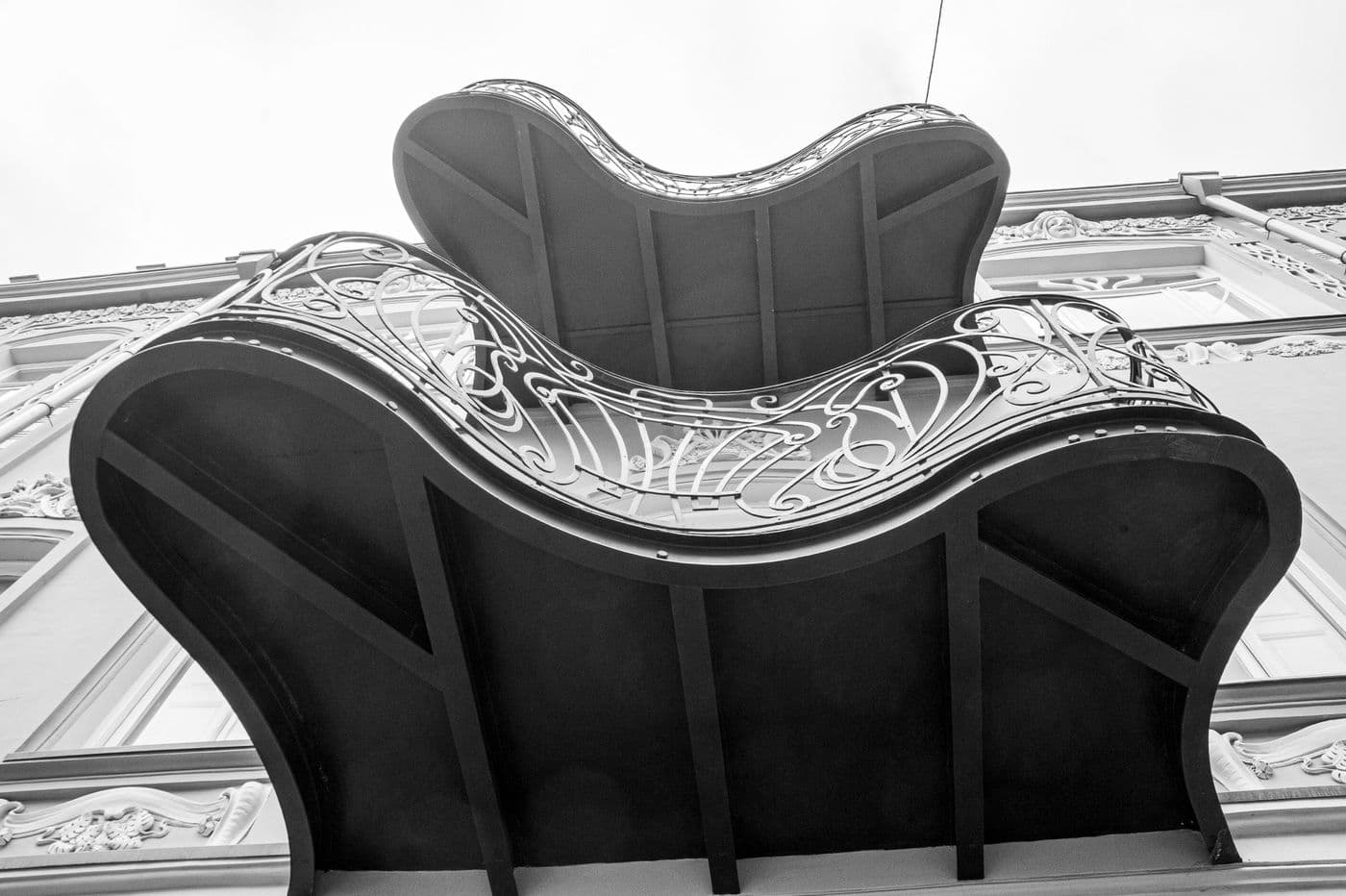
Art Nouveau (about 1890 to 1910) uses flowing, organic, whiplash curves inspired by plants and flowers. Art Deco (about 1920 to 1939) uses geometric, symmetrical, angular forms, often with luxurious materials and machine-age motifs. If it looks like growing stems and flowing hair, it is probably Nouveau; if it looks like sunbursts and stepped lines, it is Deco.
Both styles came after the Victorian era and both celebrated decoration, so people often mix them up. Yet they express opposite attitudes: one looks to nature, the other to the modern machine.
A few quick checks will let you tell which is which in furniture, lighting, glass and architecture.
Dates and background
Art Nouveau emerged in the 1890s and flourished until about the First World War. It appeared under different names in different countries, such as Jugendstil in Germany and Secession in Austria, and was a deliberate break from historical revivals.
Art Deco rose in the 1920s, after the war, and reached its peak in the 1930s. It reflected a more modern, urban and optimistic mood, with new materials and glamour.
Curves versus geometry
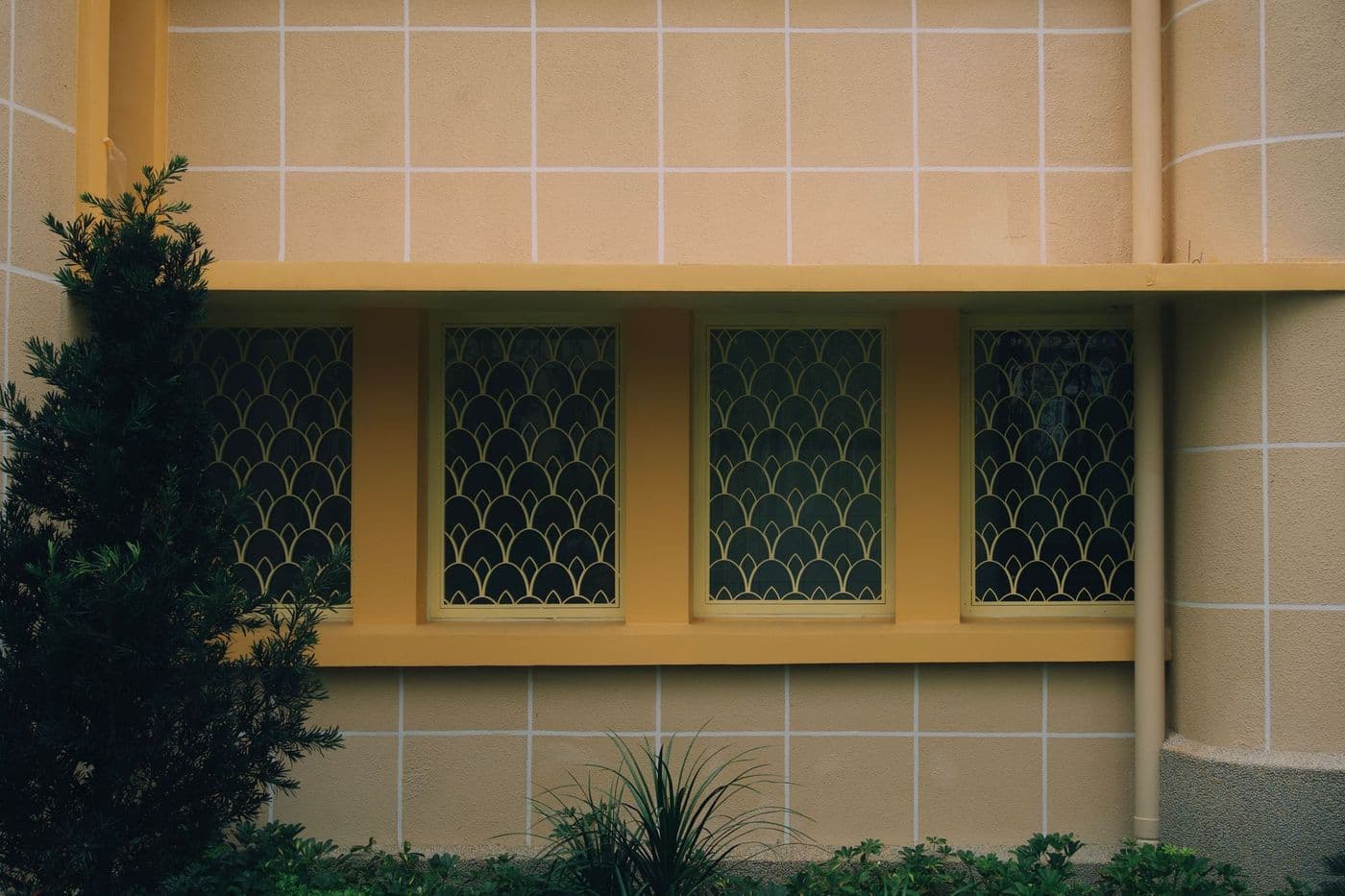
The simplest test is line. Art Nouveau favours sinuous, asymmetrical curves, sometimes called whiplash lines, that seem to grow. Art Deco favours straight lines, zigzags, circles, fans and stepped forms arranged symmetrically.
Even curves differ: Nouveau curves are irregular and organic, while Deco curves tend to be precise arcs and circles.
Typography gives a clue as well. Art Nouveau lettering tends to be hand-drawn, flowing and decorative, as seen on posters by Alphonse Mucha. Art Deco lettering is bold, geometric and often uses capitals with uniform strokes. Looking at the text on a poster, shopfront or label can help confirm which style you are seeing.
Another quick test is symmetry. Many Nouveau designs are deliberately asymmetrical, with elements that sweep to one side. Deco designs usually balance both sides of a central axis.
Motifs and inspiration
Each style has favourite subjects.
- Art Nouveau: flowers, vines, dragonflies, peacocks, swans and women with flowing hair.
- Art Deco: sunbursts, chevrons, skyscraper silhouettes, Egyptian motifs, stylised animals and streamlined machines.
Materials and colours
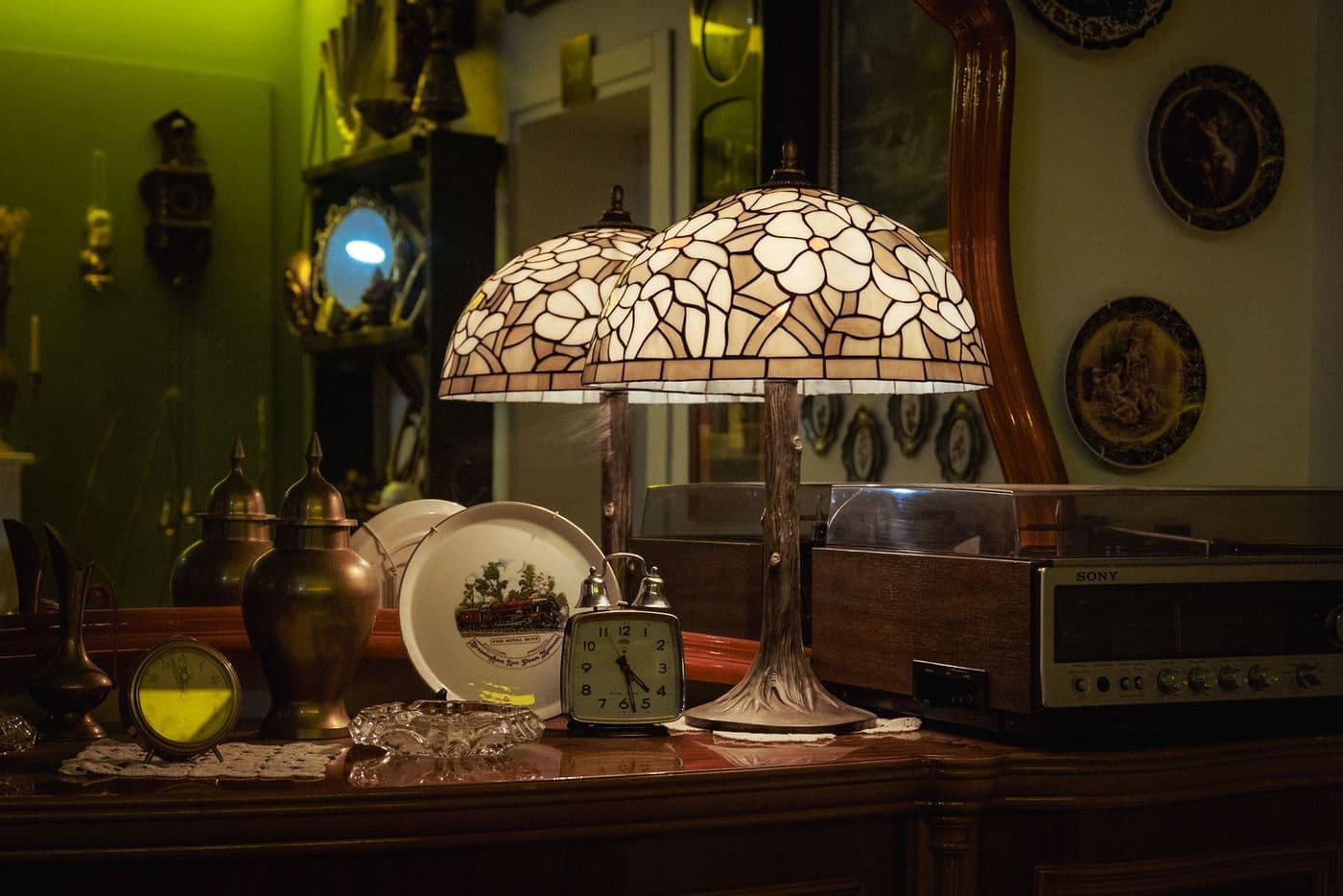
Art Nouveau uses wood, wrought iron, stained glass and ceramics, often in soft, muted or natural tones such as olive, amber, lilac and sea green. Glassmakers like Tiffany and Gallé created organic, iridescent pieces.
Art Deco prefers polished and glossy materials: chrome, lacquer, mirrored glass, exotic veneers and early plastics. Colours are bold and contrasting, such as black with gold, or deep jewel tones.
Jewellery shows the difference well. Art Nouveau jewellery often features enamel, opals, moonstones and sinuous figures, while Art Deco jewellery favours platinum, diamonds, onyx and geometric settings. Glass follows the same pattern, from vases with floral shapes to angular, moulded or frosted pieces with stepped designs.
Furniture and architecture
Art Nouveau furniture often has curved legs, carved plant forms and fluid shapes. Architecture may feature ironwork balconies, curving staircases and arched windows. Notable architects include Victor Horta, Hector Guimard and Antoni Gaudí.
Art Deco furniture is solid, symmetrical and strongly outlined, with bold veneers and stepped profiles. Buildings include skyscrapers, cinemas and hotels with strong vertical lines and decorative friezes.
Interiors from either period can be found preserved in hotels, theatres and tram stations across Europe and beyond. Visiting a well-preserved example, or browsing museum collections, is the quickest way to train your eye. Once you have seen several originals, the difference between the styles becomes obvious.
Regional variations matter too. Barcelona, Brussels, Nancy, Glasgow and Vienna each developed a distinct take on Art Nouveau, and Art Deco looked different in Paris, New York and Miami. Keep that variety in mind when comparing.
Things that blur the line
Some designers worked across periods, and a few pieces combine curves with geometric elements. Transitional styles, such as the Vienna Secession and Arts and Crafts-influenced work, add to the confusion.
If a piece does not fit neatly, consider construction and materials as well as decoration, and ask a specialist.
Quick identification checklist
Ask yourself: are the lines flowing or geometric? Are the motifs natural or abstract? Is the surface matte and earthy or glossy and metallic? Is the date range closer to 1900 or 1930?
These questions will get you to the right answer in most cases. For dating and valuation of genuine pieces, a dealer or auction specialist will be able to give a firm opinion.
Tip: Look at the edge of a design. Nouveau edges seem to drift and grow; Deco edges look measured with a ruler and compass.
Frequently asked questions
Which came first, Art Nouveau or Art Deco?
Art Nouveau came first, flourishing from about 1890 to the First World War. Art Deco followed in the 1920s and 1930s.
Are Tiffany lamps Art Nouveau or Art Deco?
Tiffany's stained glass lamps are generally associated with Art Nouveau, with their organic forms and natural motifs.
Can the two styles be mixed?
They can, but use care. Their different moods can clash, so choose a unifying colour or material.
Is Art Nouveau still collected?
Yes, particularly glass, ceramics, jewellery and posters. Values vary widely, so seek expert advice for important pieces.
Advertisement
General information only. Check product labels and manufacturer instructions before you start.
Keep reading
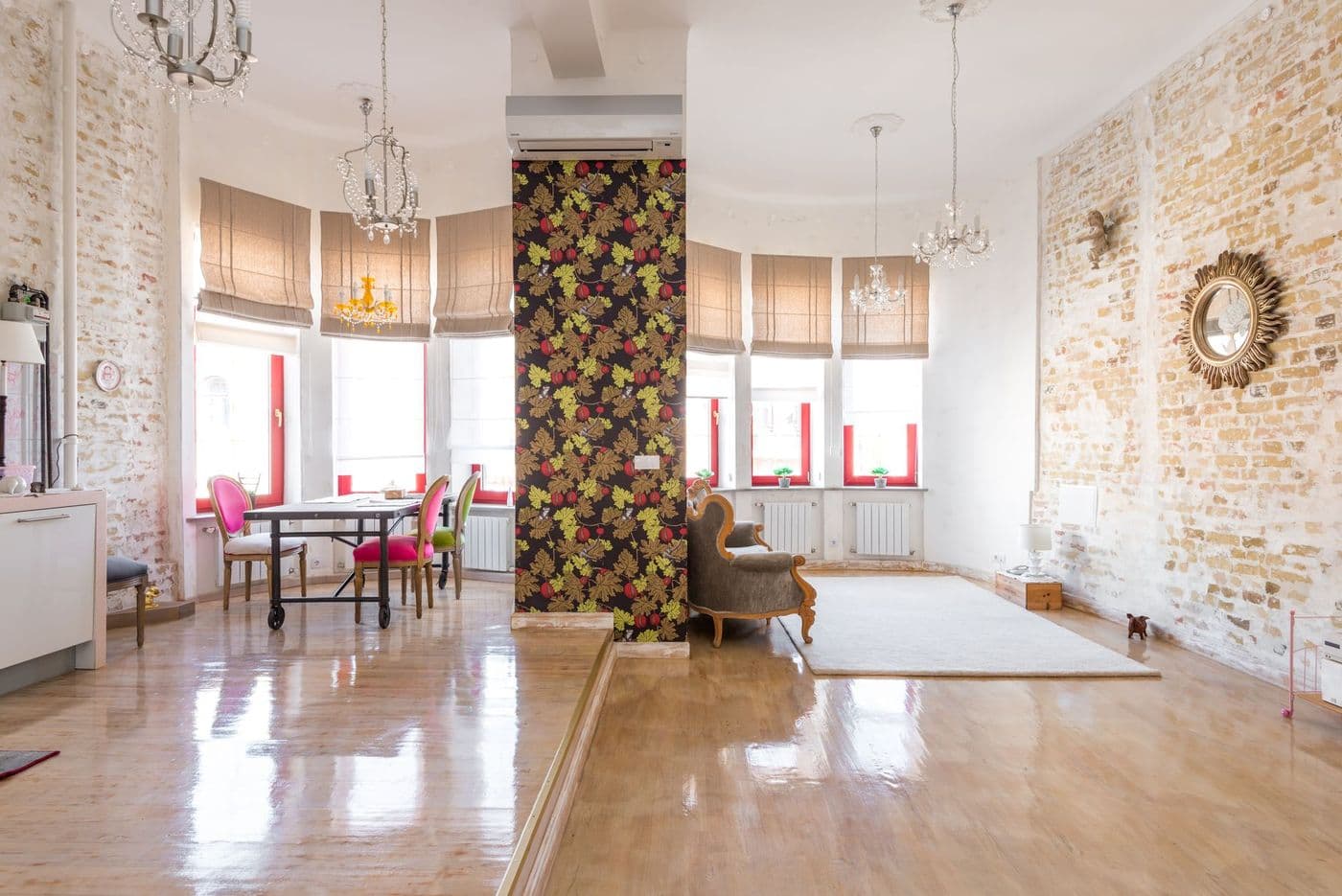
How to Mix Vintage and Modern Furniture Without It Looking Messy
Practical rules for combining vintage and modern furniture: choose a link, balance scale and colour, vary eras and let one standout piece lead each room.
Arts and Crafts Interiors Explained: Honest Materials and Handmade Detail
Discover Arts and Crafts interiors: their roots in the 1860s to 1920s, key ideas, typical oak furniture, tiles, textiles and how to bring them home today.
Georgian Interior Style Explained: Proportion, Colour and Furniture
What defines Georgian interiors? Learn the period dates, symmetrical rooms, sash windows, classic colours and typical furniture, and how to use them today.